

How CSA Farming Brings Ontario’s Harvest Straight to Your Table
CSA farming, or Community Supported Agriculture, connects you directly to a local farm by purchasing a share of its harvest before the growing season begins. You pay upfront, typically in early spring, and receive weekly or bi-weekly boxes of fresh, seasonal produce throughout the growing months. This arrangement gives farmers the financial stability they need to plant crops while you gain access to vegetables and fruits at their peak, often picked within hours of reaching your table.
The model transforms the relationship between eater and grower. Rather than treating food as a supermarket commodity, CSA membership makes you a partner in the farm’s success. When frost threatens the strawberries or abundant rain produces a bumper crop of tomatoes, you share in both the challenges and the rewards. Most Ontario CSAs run from May through October, mirroring the natural rhythm of the province’s growing season.
For many households, joining a CSA means discovering vegetables they’ve never cooked before and relearning how to eat with the seasons. Spring shares burst with tender greens and radishes, summer brings peppers and beans, and fall delivers squash and root vegetables that store through winter. Members often find their grocery bills dropping while their kitchen creativity expands, adapting weekly menus to whatever arrives in the box. The commitment requires flexibility, but thousands of Ontario families have found that constraint actually enriches their cooking and deepens their connection to the land that feeds them.
What CSA Farming Really Means

Community Supported Agriculture flips the usual grocery store transaction on its head. Instead of picking up whatever produce happens to be on the shelf that week, you’re investing in a farm’s entire growing season upfront. You become a member rather than a customer, buying a share of everything that farm will harvest over the coming months.
Here’s how it works: Before the first seedlings go in the ground, you pay for your share of the season’s harvest. That payment helps farmers cover seeds, equipment, and labour when they need it most. In return, you receive regular boxes of whatever the farm produces throughout the growing season. When the tomatoes come in heavy, you’ll have plenty. If late frost damages the lettuce crop, everyone’s basket reflects that reality.
This model creates a partnership built on mutual commitment. The farmer gains financial security and planning stability, knowing their harvest already has buyers. You gain a direct line to fresh food and the knowledge of exactly where your vegetables come from and who grew them. There’s no middleman, no markups, no mystery about how old that kale might be.
The relationship requires trust from both sides. Farmers commit to growing quality food and keeping members informed about what’s happening in the fields. Members commit to accepting the season’s natural rhythms, adapting their meal planning to what’s actually ready rather than what they’re craving. Some weeks bring abundance; others might be leaner. That’s farming, and CSA members share in both the bounty and the occasional shortfall. This shared risk strengthens the bond between farm and table in ways conventional food shopping simply can’t match.
How a CSA Membership Works in Ontario
Joining a CSA in Ontario is straightforward, though timing matters. Most farms open sign-ups in late winter or early spring, often setting deadlines in late April or early May before the growing season kicks off. Once you’ve chosen a farm, here’s what the journey typically looks like:
- Sign up during the enrollment period (usually February through April) and select your basket frequency, most farms offer weekly, bi-weekly, or monthly options to match different household sizes and eating habits.
- Pay your share cost upfront or through an installment plan if the farm offers one. This payment covers your produce for the entire season and helps farmers invest in seeds, equipment, and labour before harvest begins.
- Choose your pickup location from available options. Many farms offer on-farm pickup alongside community drop-off points in nearby towns, making participation accessible whether you live rurally or in the city.
- Receive your first basket once the season starts, typically in May when early greens, herbs, and spring vegetables are ready. From there, you’ll collect your share according to your chosen schedule through October.
The standard Ontario CSA season runs from May to October, aligning with the province’s growing calendar. During these months, you’ll receive a rotating selection of whatever’s at its peak. Bi-weekly baskets work well for smaller households or those new to cooking with unfamiliar vegetables, while monthly members often get larger quantities suited to preserving or feeding bigger families.
Beyond the core vegetable share, many farms sweeten the deal with add-ons. Farm-fresh eggs are common, as are extra salad greens for those who can’t get enough of spring lettuce and summer arugula. Some operations extend their offerings to include fresh-baked bread, honey, or cut flowers, letting you customize your share around what your household actually uses. The key is understanding what’s included in your base membership versus what costs extra, so you’re not surprised when pickup day arrives.
Getting Your Share: Pickup and Delivery Options

Most Ontario CSAs offer pickup options designed to fit different lifestyles and locations. On-farm pickup remains popular among members who enjoy visiting the source of their food, walking through fields, and chatting with farmers about the week’s harvest. These visits often become a ritual, especially for families who want their children to see where vegetables actually grow.
For urban and suburban members, community drop-off locations solve the distance challenge. Many CSA farms arrange weekly pickups at central spots like community centers, yoga studios, cafes, or members’ workplaces. ClearWater Farm, for example, coordinates pickups in Newmarket and Georgina alongside their farm location, making participation accessible across a wider region. Some farms rotate through different neighborhoods on set days, bringing the harvest closer to members’ daily routines.
Pickup timing varies by farm but typically falls on specific afternoons or evenings when most people can swing by. You’ll collect your pre-packed basket or box, often displayed in a cooler or shaded area if you’re running late. The informal gathering that happens at these spots becomes part of the CSA experience. Members swap recipes, discuss what to do with unfamiliar vegetables, and build connections with neighbors who share their commitment to local food.
Delivery to your door is less common but some farms offer it for an additional fee, particularly in denser urban areas. Understanding your farm’s distribution system before joining helps ensure the pickup rhythm fits your weekly schedule without adding stress.
Why Ontario Families Are Choosing CSA
Walking into a grocery store means choosing between tomatoes shipped from California and peppers from Mexico. Walking up to a CSA pickup means choosing which recipe to try for the kohlrabi you’ve never cooked before. That shift captures why more Ontario families are signing up for CSA memberships each season.
The freshness alone converts skeptics. CSA produce often goes from field to table within 24 hours, preserving nutrients and flavour that degrade during cross-continental transport. A tomato picked yesterday actually tastes like a tomato. Greens arrive crisp rather than wilted. Summer strawberries show up at peak ripeness instead of engineered for shelf life.
- Direct financial support keeps small Ontario farms viable and growing
- Reduced food miles cut transportation emissions and plastic reduction from minimal packaging
- Personal connection with farmers builds trust and understanding of where food originates
- Seasonal eating introduces vegetables and preparation methods many families never encounter
- Shared harvest risk creates genuine community between producers and consumers
Knowing your farmer by name changes the entire food relationship. CSA members often visit the farm, see growing practices firsthand, and ask questions directly. That transparency matters to families concerned about pesticides, soil health, or labour practices. It’s accountability you can’t get scanning a barcode.
The seasonal variety pushes culinary boundaries. June brings tender greens and radishes. August overflows with tomatoes, beans and zucchini. October delivers squash and root vegetables built for storage. Families learn to preserve, pickle and adapt menus to what’s actually ripe rather than what’s theoretically available year-round. Kids who help sort the weekly basket develop food literacy that grocery aisles can’t teach.
CSA participation strengthens the entire local food system beyond individual meals. When families commit to a season’s harvest, farmers can plan crops with guaranteed markets rather than gambling on farmers markets or wholesale buyers. That financial stability allows investment in better equipment, soil improvements, and sustainable practices. Every membership becomes a vote for the kind of agriculture Ontario communities want to support.
What to Expect in Your CSA Basket
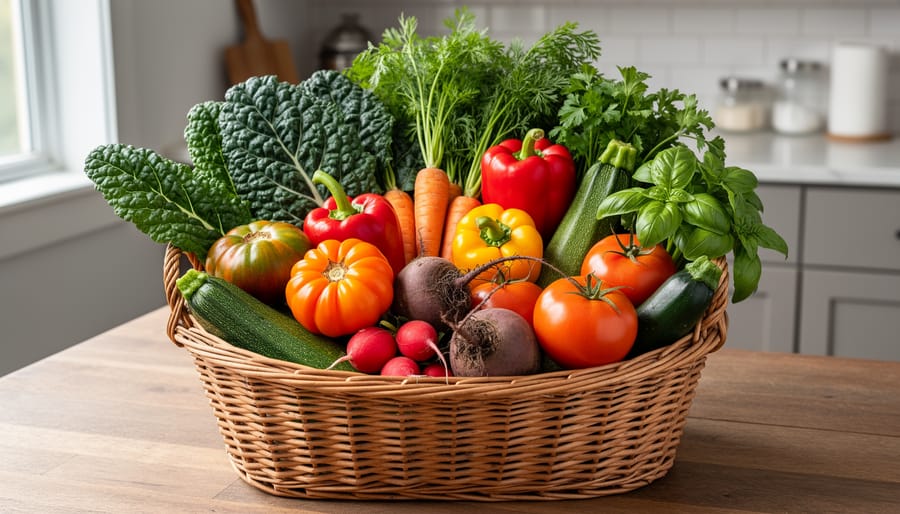
Your CSA basket transforms week by week, mirroring what’s thriving in Ontario’s fields at that moment. In May and June, expect tender lettuces, spinach, arugula, and radishes, crops that love cooler spring weather. You’ll find bunches of fresh herbs like cilantro and dill, plus early greens that make vibrant salads almost too beautiful to eat.
As summer heat arrives in July and August, your shares shift dramatically. Tomatoes arrive by the pound, alongside cucumbers, zucchini, peppers, and beans. This is peak abundance, when you might receive more fresh produce than you’ve ever had at once. Many members discover new preservation skills during these weeks, learning to freeze, can, or simply share the bounty with neighbours.
Fall brings a completely different rhythm. September and October baskets feature storage crops: winter squash with thick skins that last for months, beets, carrots, potatoes, onions, and hardy greens like kale and chard that actually sweeten after frost. These vegetables reward slow cooking and hearty meals as temperatures drop.
The key mindset shift is accepting variety over choice. You don’t select what goes in your basket; the season decides. Some weeks bring familiar favourites, others introduce vegetables you’ve never cooked. This rhythm connects you to the land’s natural cycles in a way grocery shopping never can, making you a more adaptable, creative cook in the process.
Finding the Right CSA for You
Choosing a CSA is about finding a farm whose approach matches your life and values. Start by considering your household’s eating habits: a family that cooks most nights will thrive with weekly shares, while busy professionals might prefer bi-weekly or monthly baskets. Reflect honestly on how much variety you can handle, CSAs reward adventurous eaters willing to try kohlrabi or embrace a week heavy on greens.
Pickup convenience matters more than you might think. If the farm or drop-off point requires a long drive you’ll dread making every week, that commitment will fade by August. Ontario CSAs increasingly offer flexible options, from on-farm pickup where you can chat with growers to community locations in towns like Newmarket that fit into your regular routine.
Before committing, reach out to farmers with specific questions:
- What crops and varieties do you grow throughout the season?
- How do you handle abundance, can I swap items or share my basket?
- What farming practices do you follow, and are you certified organic?
- What’s included in the base share, and what costs extra?
- What happens if weather impacts yields?
These conversations reveal whether a farm’s philosophy aligns with yours. Some operations focus on whole-system agriculture that prioritizes biodiversity and soil health, while others emphasize yield and variety. Neither approach is wrong, but one might resonate more with your priorities.
Visit the farm before signing up if possible. Walking the fields, meeting the people who’ll grow your food, and seeing how they manage their land builds the trust that makes CSA partnerships flourishing. Many farms welcome prospective members for tours in early spring, giving you a feel for the operation before the May 1 membership deadlines common across Ontario.
Choosing CSA farming connects you to something bigger than a weekly basket of vegetables. It roots you in Ontario’s agricultural rhythm, builds relationships with the people growing your food, and supports a farming model that values community over convenience. When you become a CSA member, you’re not just a customer, you’re a partner invested in your local farm’s success and the health of Ontario’s agricultural landscape.
The farms waiting to welcome you span across Ontario’s diverse regions, from established operations to small family farms testing innovative growing methods. Exploring CSA options in your area means discovering the producers who steward the land near your community, learning their approaches to soil health and biodiversity, and tasting food harvested at peak ripeness rather than picked green for shipping. Some members find that visiting a farm and experiencing the real farming life before committing helps them appreciate the work behind each share.
CSA farming strengthens the economic foundation of Ontario agriculture while delivering tangible benefits straight to your kitchen. It’s an investment in resilient local food systems, seasonal eating habits, and the continued vitality of farms that shape our provincial landscape. Start your search now, your local harvest is waiting.
0 comments on “How CSA Farming Brings Ontario’s Harvest Straight to Your Table”