
Encompass Farming: Where Ontario Growers Learn Whole-System Agriculture
Encompass farming is an integrated agricultural approach that combines diverse farming practices into a unified system, blending crop production, livestock management, ecological stewardship, and community engagement on a single farm. Rather than specializing in one commodity, farms using this model work with nature’s interconnected systems to build resilience and sustainability while producing a variety of foods for local markets.
This holistic method has gained traction across Ontario as farmers recognize the limits of single-crop operations and seek more economically stable, environmentally sound alternatives. Encompass farming isn’t new in principle. It draws from traditional mixed farming wisdom while incorporating modern ecological understanding and market strategies suited to 2026’s local food movement.
At its core, the practice treats the farm as a living ecosystem where each element supports the others. Chickens follow grazing cattle to control pests and fertilize pastures. Cover crops rebuild soil between vegetable harvests. Hedgerows provide habitat for beneficial insects that protect fruit trees. This integration reduces external inputs, spreads financial risk across multiple revenue streams, and creates farms that can weather market shifts and climate uncertainty.
For Ontario residents curious about this approach, several farms now offer hands-on learning opportunities. Everdale Farm in Hillsburgh runs structured practicum programs where beginners spend seasons working alongside experienced farmers, learning everything from soil management to direct marketing. These programs have become a pipeline for the next generation of Ontario farmers, many of whom go on to launch their own encompass operations or bring integrated practices to established farms throughout the province.
What Encompass Farming Really Means
Encompass farming treats the farm as a living, interconnected system where every decision ripples through soil, water, plants, animals, and community. Instead of optimizing for a single output, maximum yield per acre, say, this approach balances soil health, biodiversity, water cycles, crop rotation, and the needs of the people who grow and eat the food. It’s farming that asks “how does this choice affect everything else?” rather than “how do I produce more of one thing?”
Conventional single-focus farming typically centers on maximizing production of a cash crop, often relying on external inputs like synthetic fertilizers and pesticides to maintain yields. Encompass farming flips that script. A grower might plant cover crops specifically to feed soil microbes, knowing healthier soil means fewer pest problems and better water retention. They’d design crop rotations that disrupt pest cycles naturally while building fertility. Water management isn’t just about irrigation, it’s about preserving wetlands, managing runoff, and ensuring downstream neighbors aren’t affected.
In 2026, this integrated approach is gaining serious traction across Ontario for practical reasons. Farmers are seeing tangible benefits: lower input costs, more resilient crops during droughts or heavy rains, and stronger connections to local food buyers who value how their food is grown. Climate unpredictability has made the old single-focus playbook less reliable. When you’ve built a system that works with nature’s complexity rather than against it, your farm can absorb shocks that would cripple a monoculture operation. It’s not idealism, it’s smart business wrapped in ecological common sense.

Learning Encompass Farming in Ontario: Everdale’s Approach
Everdale Farm, nestled in Hillsburgh about an hour northwest of Toronto, stands out as Ontario’s most accessible model for learning integrated agriculture firsthand. Since 1994, this working organic farm has trained hundreds of farmers while simultaneously teaching thousands of children and community members how food connects to soil health, biodiversity, and local ecosystems.
Their Farmer Training program runs during the growing season and combines certified organic production techniques with small farm business management. Participants work alongside experienced farmers, learning crop planning, soil building, pest management, and direct marketing, all within a framework that treats the farm as an interconnected system rather than isolated tasks. The program welcomes beginners with no prior agricultural experience, making it ideal for career changers and urban residents exploring farming.
Beyond farmer training, Everdale weaves encompass farming principles into every program they offer. Their School Programming brings thousands of Ontario students to the farm each year, where kids plant seeds, harvest vegetables, and observe how composting, crop rotation, and pollinator habitat fit together. These field trips don’t just teach where food comes from, they demonstrate how farmers think systemically about land stewardship.
The Children’s Farm Camp extends this education during summer months, giving young people week-long immersion in farm rhythms. Campers collect eggs, tend garden beds, and participate in workshops that connect what they’re doing to broader ecological patterns. Starting agriculture education at this age builds a generation that intuitively understands integrated systems.
Everdale also hosts public workshops throughout the year on topics like season extension, seed saving, and farm-to-table cooking. These sessions attract home gardeners, market vendors, and curious eaters, expanding the reach of whole-system thinking beyond full-time farmers. When community members understand the complexity behind their food, they become better supporters of local agriculture and more informed consumers at Ontario farmers’ markets.
Practicum Programs: Hands-On Training Without Prerequisites
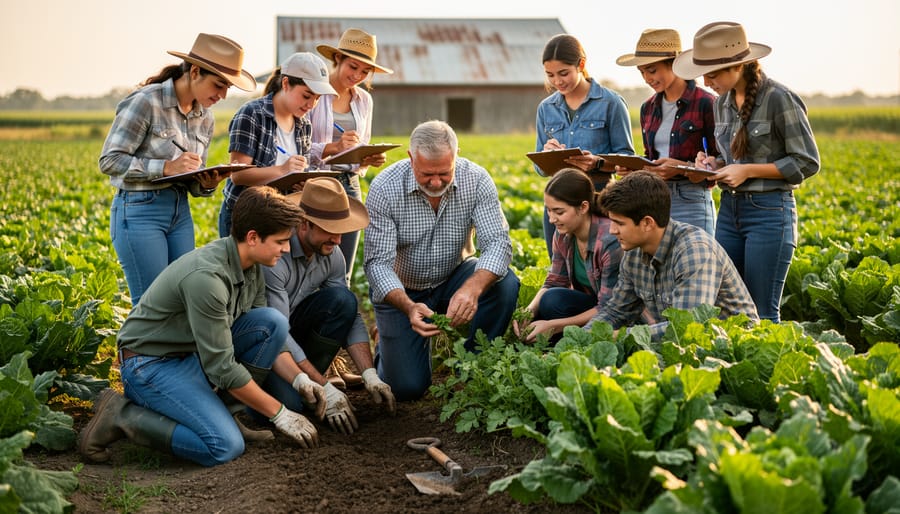
Practicum-style training programs offer the most direct route into encompass farming for anyone ready to get their hands dirty. These intensive, season-long experiences immerse you in the daily reality of integrated agriculture, from planting through harvest, without demanding years of prior study or a farming background.
The Practicum in Sustainable Agriculture model, developed by organizations like UBC Farm’s Centre for Sustainable Food Systems, exemplifies this accessible approach. These programs run during the growing season (typically April through October, or April to August for condensed summer tracks) and teach certified organic production alongside small farm business management. You learn crop planning, soil fertility practices, pest and disease management, and how to start a food business with market-ready products, all skills that encompass farming demands.
| Program Duration | Experience Required | Location Examples | Core Focus Areas |
|---|---|---|---|
| April, October (full season) | None (beginner/intermediate) | Ontario (Everdale, Hillsburgh) | Certified organic production, integrated pest management |
| April, August (summer intensive) | None (beginner/intermediate) | Massachusetts (Beverly), British Columbia (UBC Farm) | Small farm business management, crop planning |
What makes these programs powerful is their beginner and intermediate-level design. No prior experience is required. You show up ready to learn, and the farm becomes your classroom. Most practicums operate on working certified organic farms, so every lesson connects directly to real production challenges and solutions.
Ontario growers looking for this type of training can explore offerings at institutions like Everdale in Hillsburgh, which integrates farmer training with broader community education. The hands-on nature of practicum learning means you finish the season not just understanding encompass farming principles, but having lived them through an entire crop cycle.
Why Ontario Farmers Are Embracing This Approach
Ontario farmers who’ve shifted to encompass farming consistently report the same breakthrough: everything got easier when they stopped fighting their land and started working with it.
Take Bruce Greenwood, who farms near Guelph. After three seasons rotating cover crops with his vegetables and integrating chickens to manage pests, his soil now holds moisture through dry spells that used to devastate his yields. He’s cut fertilizer costs by roughly 60% and hasn’t sprayed for cabbage worms since 2024. The chickens handle that problem while adding nitrogen exactly where his brassicas need it next season.
Improved soil fertility ranks as the most tangible benefit farmers cite. Integrated crop rotations, strategic cover cropping, and composting systems build organic matter year over year. Farmers working degraded land often see dramatic changes within three growing seasons, soil that was hard-packed and pale transforms into dark, crumbly material that doesn’t wash away in heavy rain.
Pest management becomes simpler when farms support beneficial insects, birds, and soil microbes. Instead of calendar spraying, farmers monitor and respond. Many report that diverse plantings and habitat corridors stabilize pest populations naturally, reducing both chemical costs and labour hours spent scouting.
Climate resilience matters more each season. The 2025 summer drought hit Ontario hard, but farms with deep-rooted perennials, robust soil structure, and integrated water management weathered it better than neighbouring conventional operations. Diversified production also spreads risk, when one crop struggles, others compensate.
Community connections strengthen too. Farmers practicing this approach often collaborate, sharing equipment, knowledge, and even labour during peak seasons. They’re building regional food networks that don’t depend on distant suppliers or volatile commodity markets. That local interdependence creates both economic stability and genuine relationships that make farming less isolating.
How Encompass Farming Strengthens Farmers’ Markets
Farms that practice integrated agriculture transform Ontario farmers’ markets from simple transaction spaces into showcases of seasonal abundance. When growers manage soil health, biodiversity, and crop rotation as connected systems rather than isolated tasks, they naturally produce a wider range of products throughout the season. A single encompass farm might offer spring greens, summer berries, fall squash, and value-added preserves, all from the same land, using practices that regenerate rather than deplete resources.
Markets thrive when farms bring diversity to the table, turning weekly shopping trips into genuine community gatherings where people discover new varieties and reconnect with the seasons.
This variety keeps customers coming back week after week. Instead of shopping once for tomatoes and not returning until apples arrive, buyers develop ongoing relationships with growers who can explain how cover crops improved this year’s carrots or why the garlic harvest started earlier than usual. That direct connection builds trust and loyalty that online shopping can’t replicate.
For new vendors, understanding these dynamics matters. Learning to farmers’ market tips and how to sell at markets becomes easier when you have genuinely diverse, story-rich products to share. Farms practicing whole-system agriculture inherently have those stories, the “why” behind each harvest connects directly to soil, weather, and thoughtful management rather than generic growing schedules.
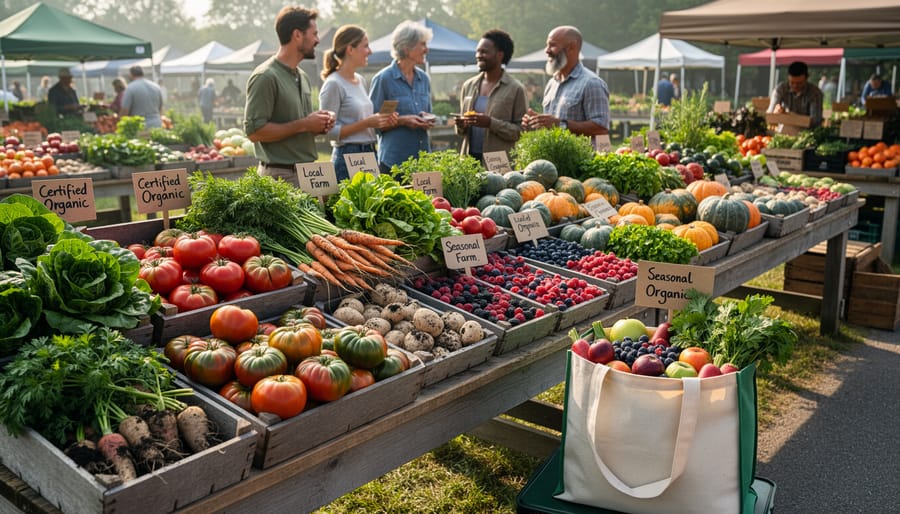
Ontario’s agricultural future is being shaped right now by farms that think bigger than a single crop or season. When you shop at your local farmers’ market, you’re not just buying fresh food, you’re voting for farms that rebuild soil, protect water, and strengthen rural communities through integrated practices. Every purchase from a vendor practicing encompass farming reinforces this whole-system approach and makes it viable for more growers.
If you’re considering farming yourself, Ontario offers accessible training programs that welcome beginners with no prior experience. These hands-on opportunities teach you to think like an ecosystem manager, not just a crop producer. The province’s shift toward integrated agriculture isn’t a passing trend; it’s a practical response to climate uncertainty and resource constraints that’s already proving its worth on working farms across the region.
0 comments on “Encompass Farming: Where Ontario Growers Learn Whole-System Agriculture”