

How to Start a Culinary Business That Thrives at Ontario Farmers’ Markets
# How to Start a Culinary Business at Ontario Farmers’ Markets
The surge in consumer interest in local food has created unprecedented opportunities for culinary entrepreneurs across Ontario. Whether you’re perfecting your grandmother’s jam recipe in a home kitchen or dreaming of selling fresh pasta at weekend markets, transforming your culinary passion into a thriving business is more accessible than ever—but it requires careful planning and understanding of food safety regulations.
Starting a culinary business through farmers’ markets offers a lower-risk entry point than opening a restaurant or retail storefront. You’ll connect directly with customers who value quality ingredients and authentic food experiences, test products in real-time, and build a loyal following before investing in expensive infrastructure. Many of Ontario’s most successful artisan food producers started exactly this way, selling preserves, baked goods, and prepared foods at local markets.
This guide walks you through every essential step: securing proper permits and licenses, choosing your product focus, understanding Ontario’s food safety requirements, finding the right markets for your offerings, pricing for profitability, and scaling strategically. You’ll learn from real vendors who’ve navigated these waters successfully and discover practical strategies for standing out in Ontario’s vibrant farmers’ market scene.
Your culinary business journey begins with understanding what’s legally required, what customers truly want, and how to deliver exceptional products consistently. The farmers’ market community is ready to welcome you—let’s ensure you’re prepared to succeed.
Understanding What You Can Legally Sell
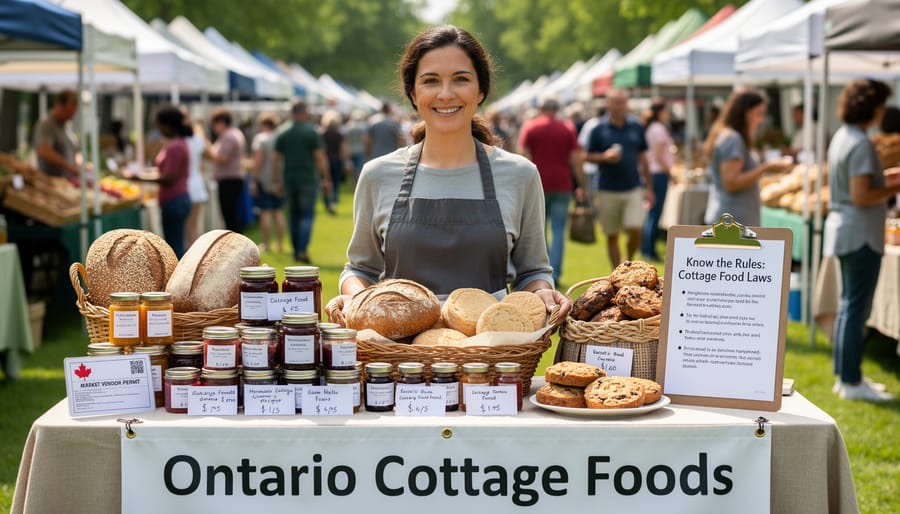
Before you start your culinary business at an Ontario farmers’ market, understanding what you’re legally permitted to sell is essential. The province’s regulations distinguish between low-risk and high-risk foods, and this difference shapes your entire business approach.
Low-risk foods are those that don’t support bacterial growth and can be safely prepared in a home kitchen. These typically include baked goods like cookies, muffins, and bread, along with jams, jellies, dried herbs, and certain confections. Many successful vendors have launched thriving businesses from their home kitchens by focusing on these permitted products. Sarah from Elora started with her grandmother’s butter tart recipe, building a loyal following at her local market before eventually expanding to a commercial kitchen.
High-risk foods require temperature control and cannot be prepared at home without proper licensing. These include items containing cream fillings, fresh dairy products, meat products, and most sauces. If your culinary passion involves these categories, you’ll need to work from a licensed commercial facility or obtain specific permits from your local health unit.
Ontario’s regulations for selling food from home also require proper labeling. Your products must display your business name, product name, complete ingredient list in descending order by weight, allergen information, and net quantity. While this might seem detailed, these labels build customer trust and show your commitment to transparency.
Contact your local public health unit before you start your culinary business, as regulations can vary slightly by region. They’ll provide specific guidance on your product category and may conduct a home kitchen inspection if you’re producing low-risk items. This proactive approach ensures you’re building your business on a solid foundation from day one, allowing you to focus on what you do best: creating delicious products that bring your community together.
Developing Your Culinary Business Concept
Finding Your Market Fit
Before you start your culinary business, spend time understanding what your local community actually wants to buy. Visit farmers’ markets in your area on different weekends and take notes. What products have the longest lines? Which vendors sell out early? This firsthand observation reveals valuable patterns.
Talk directly with market coordinators and established vendors. Sarah Chen, who launched her preserves business in Guelph, discovered through casual conversations that no one was making small-batch kimchi at her target market. That gap became her entry point, and within six months, she expanded to three locations.
Look at seasonal opportunities too. Ontario’s short but glorious berry season creates demand for fresh fruit products, while fall brings appetites for hearty soups and baked goods. Consider what you can offer when certain ingredients are at their peak.
Check out online community groups and local food forums where people discuss what they wish they could find at markets. These conversations often highlight unmet needs. Pay attention to dietary trends in your area, whether that’s gluten-free baking, plant-based options, or traditional ethnic foods.
Remember that finding your market fit isn’t about copying what’s already successful. It’s about identifying where your skills and passion intersect with genuine community needs. Start small, test your products, and listen carefully to customer feedback before scaling up your culinary business.
Building on Seasonal Strengths
When you start a culinary business, timing matters just as much as taste. Building your product line around Ontario’s seasonal produce creates natural momentum for your venture while connecting you with what customers truly want.
Sarah Chen launched her preserves business by focusing on spring rhubarb and strawberries, then transitioning to summer stone fruits before finishing her year with autumn apple butters. This seasonal approach meant she could source ingredients at peak freshness and affordability while offering products that matched what shoppers were already craving.
Seasonal alignment helps your culinary business in practical ways. You’ll negotiate better prices when produce is abundant, and your storage needs stay manageable. Your booth becomes a destination as customers anticipate your timely offerings, whether that’s asparagus pesto in May or butternut squash soup in October.
Start by mapping out which seasons best suit your product type. Baked goods can incorporate seasonal fruits and vegetables year-round, while fresh salsas and salads shine in summer months. Consider preservation methods like freezing, canning, or dehydrating to extend your seasonal ingredients into slower months, creating year-round income from peak-season harvests. This strategy transforms the natural rhythm of Ontario agriculture into a sustainable business advantage.
Getting Your Kitchen Ready
Your kitchen setup will significantly influence how you start a culinary business and what products you can legally sell. In Ontario, health units regulate food preparation spaces to protect consumers, and understanding these requirements early saves time and money down the road.
For many aspiring food entrepreneurs, starting from home feels most accessible. Ontario’s home-based food business guidelines allow certain low-risk products like baked goods, jams, and dried herbs to be prepared in residential kitchens without commercial licensing. Sarah Chen started her preserves business this way, making small-batch rhubarb jam each spring before expanding to a commercial space. However, home kitchens cannot produce items requiring refrigeration for safety, such as cream-filled pastries or fresh salsa.
| Kitchen Type | Best For | Approximate Cost | Health Inspection |
|---|---|---|---|
| Home Kitchen | Low-risk baked goods, preserves, dry mixes | Minimal startup | Not required |
| Licensed Home Kitchen | Expanded product range with modifications | $2,000-$8,000 | Required annually |
| Commercial Kitchen | All products including perishables | $500-$2,000/month rental | Required regularly |
If your vision includes refrigerated items or prepared meals, you’ll need access to a licensed commercial kitchen. Many Ontario communities offer shared commercial kitchens where entrepreneurs rent time by the hour, making this option affordable when starting out. Contact your local health unit first to discuss your specific products and receive guidance on which setup meets regulations.
Remember that meeting health standards protects both your customers and your business reputation. Ontario consumers value knowing their food comes from clean, inspected facilities, especially when supporting local culinary entrepreneurs at farmers’ markets.
Securing Necessary Permits and Insurance
Starting a culinary business requires navigating several regulatory requirements to operate legally in Ontario. Your first step involves registering your business name with the provincial government and obtaining a business number from the Canada Revenue Agency. This foundational paperwork establishes your venture officially and enables you to collect HST if applicable.
Health and safety compliance stands at the heart of food-based businesses. You’ll need approval from your local public health unit, which conducts inspections of your production facility—whether that’s a commercial kitchen, home-based operation under specific conditions, or shared kitchen space. Inspectors evaluate food handling practices, storage temperatures, sanitation procedures, and overall cleanliness. Many aspiring food entrepreneurs find success by connecting with experienced vendors who’ve walked this path before. Sarah Chen, who launched her preserves business through Ottawa farmers’ markets, recalls: “The health inspector became an ally once I understood they wanted me to succeed safely. Their guidance actually improved my processes.”
Insurance protects both your business and customers. General liability coverage is essential, and product liability insurance specifically covers food-related incidents. Here’s where farmers’ market networks truly support their community members. Many market organizations negotiate group liability insurance rates, making coverage more affordable for small-scale producers. Some markets include basic liability protection as part of vendor membership fees, significantly reducing your startup costs.
Check your local municipality for additional permits, such as mobile food vendor licenses if you’re operating a food truck or temporary food establishment permits for market stalls. Requirements vary between cities, so connecting with your regional farmers’ market association early provides clarity on what documentation you’ll need before your first sale.
Joining an Ontario Farmers’ Market
Launching your culinary business at an Ontario farmers’ market offers an excellent entry point with built-in foot traffic and community support. Many successful food entrepreneurs, from specialty bakers to artisan preserve makers, started their journey at these vibrant community hubs before expanding to retail locations or online sales.
To get started, find local farmers’ markets in your area by searching Farmers’ Markets Ontario’s directory or your municipal website. Each market operates independently with unique vendor requirements, so research which markets align with your products and business goals. Consider factors like market size, customer demographics, vendor fees, and seasonal schedules when choosing where to apply to farmers’ markets.
Market coordinators carefully select vendors to ensure quality and variety. They typically look for producers offering unique, high-quality products that complement rather than duplicate existing vendor offerings. Your application should highlight what makes your culinary business distinctive, whether that’s your grandmother’s traditional recipe, locally-sourced ingredients, or innovative flavour combinations. Be prepared to provide product samples, proof of required permits and insurance, and demonstrate your understanding of food safety practices.
Starting at the Guelph Farmers’ Market gave me direct feedback from customers that shaped my entire product line, and the coordinator’s mentorship taught me more about running a food business than any course could.
This sentiment reflects a key benefit many vendors experience. Established market networks provide invaluable marketing assistance through collective social media promotion, seasonal events, and community partnerships. Many markets offer professional development workshops covering topics like pricing strategies, food trends, and customer engagement techniques.
The relationships you build with fellow vendors create a supportive community where experienced entrepreneurs share insights and newcomers find guidance. Markets also provide low-risk opportunities to test new products, gather customer feedback, and refine your offerings before investing in larger production runs. This hands-on learning environment, combined with immediate sales and direct customer connections, makes farmers’ markets an ideal launchpad for your culinary business journey.
Pricing Your Culinary Creations
Setting profitable yet fair prices is essential when you start a culinary business. Understanding your true costs creates a foundation for sustainability while keeping your products accessible to the community.
Begin by calculating all expenses, including ingredients, packaging, labour, transportation, and your farmers’ market booth fees. Don’t forget indirect costs like equipment maintenance and recipe testing. A common mistake new culinary entrepreneurs make is underpricing by forgetting to account for their time and expertise.
Sarah Chen, who launched her preserves business at the Hamilton Farmers’ Market, learned this lesson early. “I initially priced my jars based only on ingredient costs,” she shares. “Once I factored in the hours spent preparing, cooking, and selling, I realized I was earning less than minimum wage.” After adjusting her prices by thirty percent and emphasizing her use of Ontario-grown fruit, customers continued supporting her business enthusiastically.
Research competitive pricing by visiting several farmers’ markets in your area. Notice how similar products are priced and what makes certain vendors stand out. Your pricing should reflect quality, uniqueness, and the story behind your creations.
Communicate value clearly through signage explaining your ingredients’ local origins, preparation methods, or seasonal availability. When customers understand that your strawberry jam features berries picked at their peak from a nearby farm, they appreciate why it costs more than mass-produced alternatives.
Remember, farmers’ market shoppers actively choose to support local agriculture. They’re investing in their community, fresh flavours, and sustainable food systems. Price your culinary creations to honour both your work and their values, creating relationships built on mutual respect and delicious food.
Building Your Market Presence
Your farmers’ market booth becomes the face of your culinary business, so creating an inviting presence is essential. When you start your culinary business at Ontario farmers’ markets, you’re not just selling products—you’re building relationships with your community.
Your booth setup tells customers who you are before you say a word. Display your products at eye level with clear, attractive signage that includes your business name and pricing. Consider these practical approaches for market success:
- Arrange products to create visual appeal with varying heights and colorful displays
- Offer samples whenever possible to let your food speak for itself
- Keep your booth clean and organized throughout the market day
- Bring plenty of small bills and consider mobile payment options for customer convenience
- Display any certifications or local sourcing information prominently
Beyond the visual elements, genuine customer engagement builds your loyal following. Share the story behind your culinary creations—whether it’s your grandmother’s preserve recipe or how you source strawberries from a nearby farm each June. Ontario customers appreciate knowing where their food comes from and the hands that prepared it.
Take Sarah Chen’s experience as inspiration. She started her dumpling business with a simple folding table at the Kitchener Market. By greeting every customer warmly and sharing stories about her family’s traditional recipes, she built a devoted customer base within three months. Today, her booth draws lineups before the market even opens.
Remember to collect customer feedback and contact information for a mailing list. Many successful vendors share weekly updates about which seasonal products they’ll bring to market, creating anticipation and repeat visits. Building your market presence takes consistent effort, but the community connections you forge become the foundation of a thriving culinary business.

Growing Beyond Your First Market
Once your culinary business finds its rhythm at your first farmers’ market, you’ll naturally start thinking bigger. Growing beyond that initial success requires thoughtful planning, but the path forward is well-traveled by others in Ontario’s vibrant food community.
Start by testing increased production capacity gradually. Sarah Chen, who launched her artisan dumpling business at the Kitchener Market, doubled her production over six months rather than all at once. This measured approach helped her maintain quality while understanding her true capacity limits and identifying equipment needs.
Expanding to additional markets broadens your customer base and stabilizes income across different communities. Research markets in neighboring towns, considering their vendor requirements, customer demographics, and whether their operating days complement your existing schedule. Many successful vendors operate at two or three markets weekly, rotating between locations to maximize reach without overextending themselves.
Building wholesale relationships with local retailers, restaurants, and cafes creates steady revenue streams beyond market days. Begin with small trial orders to establishments that align with your values. These partnerships often start with conversations at the market itself, where chefs and shop owners discover your products firsthand.
Provincial farmers’ market organizations offer invaluable support for growing vendors. Farmers’ Markets Ontario provides resources, networking opportunities, and educational workshops specifically designed to help culinary entrepreneurs scale sustainably. Their connections can open doors to new markets, wholesale opportunities, and collaborative relationships with other producers.
Remember that sustainable growth preserves what made your culinary business special in the first place. Your commitment to quality and community remains your foundation, even as your reach expands across Ontario.

Starting a culinary business may feel overwhelming at first, but as you’ve learned throughout this guide, it’s entirely achievable with thoughtful preparation and community support. Ontario’s vibrant farmers’ market network offers an accessible entry point for aspiring food entrepreneurs, providing not just a place to sell but a welcoming community ready to help you succeed.
Consider Sarah, who began with just a folding table and her grandmother’s preserves recipe at a small rural market. Three years later, she operates from multiple locations and employs two assistants. Stories like hers happen across Ontario every season because farmers’ markets create space for dreams to take root and grow.
When you choose to launch your culinary venture at a farmers’ market, you’re doing more than starting a business. You’re joining a movement that strengthens local food systems, builds meaningful connections between producers and consumers, and keeps dollars circulating within your community. Every jar of jam, loaf of bread, or container of prepared meals you sell contributes to a more resilient local economy.
For Ontario consumers reading this, your role matters tremendously. When you support local agriculture and culinary entrepreneurs at farmers’ markets, you’re investing in your neighbors’ livelihoods and ensuring fresh, quality food remains available in your community. You’re part of the story that makes ventures like Sarah’s possible.
The journey from kitchen to market stall is within reach. Take that first step today.
0 comments on “How to Start a Culinary Business That Thrives at Ontario Farmers’ Markets”